Family Trust
A Family Trust (Discretionary Trust) is a legal structure that holds assets for the benefit of family members. It provides flexibility in distributing income and capital gains to minimize tax while offering asset protection. People use Family Trusts when they have more than $100,000 to invest outside of superannuation, as it allows them to distribute income to family members with lower tax rates and protect assets from personal creditors.
Key Parties
- Settlor: Person who creates the trust (usually a one-time role)
- Trustee: Manages the trust and makes distribution decisions (can be individual or company)
- Principal Beneficiary: The main beneficiary for whom the trust is established
- Appointor: Can remove and appoint trustees (usually the settlor or principal beneficiary)
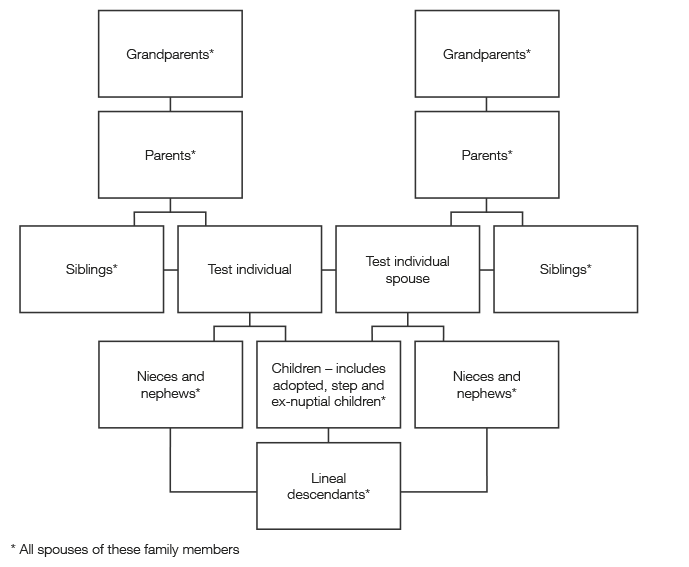
- Family Members: Family members are defined as the principal beneficiary's grandparents and parents, and all the linear descendants of the parents (siblings, niblings, children, great grandchildren etc) and their current partners. And the same for the current partner of the principal beneficiary.
Family Trust Benefits
- Tax Distribution: Stream capitlal gains, franked income and other income separately to lowest tax rate beneficiaries, potentially reducing overall tax from 47% to 0-19%
- Asset Protection: Assets held in trust are protected from personal creditors, providing bankruptcy protection
- Estate Planning: Smooth transfer of wealth to next generation without triggering capital gains tax. However trusts can only last for 70 years in most states.
- Investment Flexibility: Can invest in any asset class without restrictions, however getting a loan to invest in property is more difficult and comes with additional land tax.
Tax Benefits
The primary benefit of a Family Trust is the ability to distribute income strategically:
Income Distribution Strategy
Distribute income to family members with the lowest marginal tax rates. For example:
- Distribute to adults or retired parents who may have lower incomes or tax-free thresholds or have prior year losses
- Distribute to a corporate beneficiary to cap tax at 25% or 30%
- Retain income in the trust (taxed at 47%) only when no lower-rate beneficiaries are available
This can reduce effective tax rates from 47% (top marginal rate) to as low as 0% (for beneficiaries with no other income) or 19% (for beneficiaries in lower tax brackets).
When to Set Up a Family Trust
Consider setting up a Family Trust when:
- You have more than $100,000 to invest outside of superannuation
- You have family members with different tax rates who can benefit from income distributions
- You want asset protection from personal creditors or business risks
- You're planning for estate transfer to the next generation
- You have investment income that would otherwise be taxed at high marginal rates
Corporate Trustee
A Family Trust can have either individual trustees (each member acts as a trustee) or a corporate trustee (a company acts as the trustee). Using a corporate trustee provides several advantages:
Benefits of Corporate Trustee
- Separating Liability: Separates liability between you personally and the trust. If the trust faces legal issues, your personal assets are better protected because the company (not you personally) is the trustee
- Reducing Cross Contamination: Reduces cross contamination between personal and trust affairs. The corporate trustee creates a clear legal separation, making it easier to demonstrate that trust assets are separate from personal assets
- Easier Trustee Changes: Easier to change trustees by just changing company directors. Instead of updating trust deeds and notifying all parties when trustees change, you simply change the directors of the corporate trustee company
- Professional Structure: Provides a more professional and formal structure, which can be beneficial for estate planning and business relationships
Downsides of Corporate Trustee
- ASIC Fees: Requires annual ASIC fees (currently around $300/year) for the company registration
- Additional Setup: Requires setting up a company first, which adds initial setup costs and complexity
Self Managed Support
Self Managed provides documents to maintain non-reporting corporate trustees free of charge. This means you can use a corporate trustee without the ongoing compliance burden - Self Managed handles all the necessary documentation and reporting requirements.
Using a Corporate Beneficiary
When all individual beneficiaries are already in the 30%+ tax bracket, you can distribute income to a corporate beneficiary (company) to cap the tax rate at 25-30% instead of 47%.
This is particularly useful for:
- High-income families where all members are in top tax brackets
- Retaining earnings for future investment without paying top marginal rates
- Delaying tax until the income is distributed to individuals as franked dividends
Tax Rate Comparison
- Individual (47% rate): Highest marginal tax rate
- Corporate Beneficiary: 25-30% corporate tax rate (depending on company size)
- Lower-rate Beneficiaries: 0-19% depending on their other income
How to Set Up a Family Trust
Setting up a Family Trust involves several steps:
- Trust Deed: Create a trust deed which outlines the purpose and principal beneficiary and defines how the trust calculates and distributes income
- Register the Trust: Register the trust with the relevant state revenue office
- Pay Stamp Duty: Pay stamp duty (varies by state, typically $500-$2,000)
- Family Election: Make the family election with the ATO to access family trust concessions
- Apply for ABN: Apply for an Australian Business Number (ABN) for the trust
- Apply for TFN: Apply for a Tax File Number (TFN) for the trust
- Bank Account: Set up a bank account in the trustee's name (or company's name if using a corporate trustee)
- Broker Account: Set up a broker account in the trustee's name (or company's name if using a corporate trustee) for share and investment trading
Corporate Trustee Note
If using a corporate trustee, note that Corporate Trustees don't need ABNs or TFNs. However, if the company is also acting as a corporate beneficiary or operating company, it will need an ABN and TFN.
Account Ownership
It's critical that bank and broker accounts are opened in the trustee's name (or company's name if using a corporate trustee), not in your personal name. This ensures proper separation of trust assets and compliance with trust law.
Ongoing Compliance
Family Trusts require ongoing compliance activities:
- Distribution Nominations: Make distribution nominations before the end of the financial year (by June 30) - this determines how income and capital gains are distributed to beneficiaries
- Beneficiary Statements: Prepare beneficiary statements showing each beneficiary's share of income and capital gains
- Balance Sheets: Maintain balance sheets showing trust assets and liabilities
- P&L Statements: Prepare profit and loss statements showing trust income and expenses
- Record Keeping: Maintain detailed records of all trust transactions, investments, and distributions
Important Deadline
Distribution nominations must be made before June 30 each year. If you miss this deadline, the trust will be taxed at the top marginal rate (47%) on undistributed income.
Tax Reporting
Family Trusts require several tax reporting documents:
- Trust Tax Return: Annual trust tax return (formally lodged with the ATO) showing trust income, expenses, and tax payable
- Beneficiary Distributions: Statements showing how income and capital gains were distributed to each beneficiary
- Trust Income Supplementary: Supplementary form detailing the breakdown of trust income by type (dividends, interest, rent, etc.)
- Capital Gains Supplementary: Supplementary form detailing capital gains and losses, including the CGT discount application
Each beneficiary who receives a distribution must include their share of trust income and capital gains in their personal tax return.
Ongoing Costs
Family Trusts have ongoing costs that need to be considered:
- Annual Accounting: Typically $1,500-$3,000 for trust tax return preparation and compliance
- ASIC Fees: If using a corporate trustee, annual ASIC fees apply (currently around $300/year)
- Legal/Advisory: May need periodic legal or tax advice for complex situations
These costs are generally worthwhile when you have sufficient investment income to benefit from tax savings, typically $100,000+ in investments generating income.
Frequently Asked Questions
Yes you can, but you need to ensure the terms of the trust match what our template defines so the distribution and tax calculations are handled in the same way. If your existing trust deed has different terms or structures, you may need to have it reviewed or updated to ensure compatibility with Self Managed's automated systems.